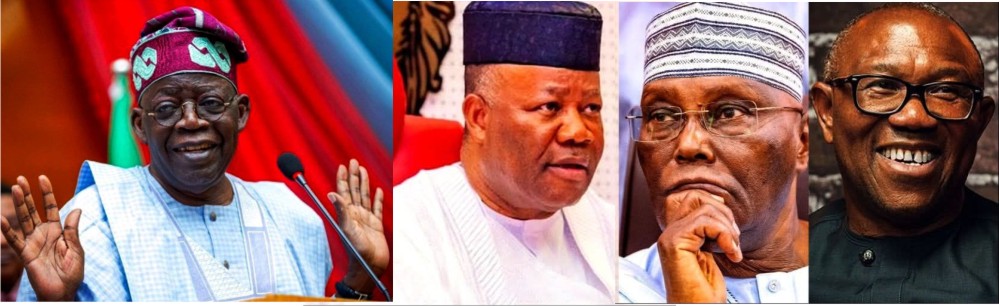
You could see the shift long before the defections began. You could see it in the way opposition meetings lost their energy. You could see it in the way their leaders slouched in their chairs, their voices thin, their eyes tired. You could see it in the way their children quietly crossed over to the ruling party, unwilling to mortgage their futures to the fading ambitions of their parents. Atiku Abubakar’s son Abba did it. Senator David Mark’s daughter Blessing Onyeche Onuh did it. Iyabo Obasanjo, who has lived much of her political life in a different orbit from her father, found her path aligned with the ruling party. And then there were heirs like Bello El Rufai, who never had to cross over because they were already positioned inside the only political house that looked like the future. It has become a portrait of a country where even the heirs have stopped pretending that the old order can be revived. These were not isolated choices. They were signals. They showed where the next generation believed the country was heading. They showed which political house they trusted to hold the future.
By March 2026, the numbers told the story with a clarity that felt almost cruel. APC controlled thirty one of the thirty six states. That level of territorial dominance has no precedent in the Fourth Republic. It was not just a political map. It was a psychological map. It showed where power lived. It showed where the future was being negotiated. It showed who the country trusted to hold the pen.
The Senate confirmed the same reality. Eighty five APC senators sat in the red chamber by March 2026. That was not a majority. It was a mountain. The defections came in waves. Nine senators crossed into ADC in a single sweep, not because ADC had become a force, but because the opposition had become a vacuum. PDP shrank into single digits. LP and NNPP became symbols rather than structures. The minority caucus became a mosaic of small parties with no shared ideology and no shared future. The Senate had become a one way street.
This was not how the Fourth Republic began. In 1999, Nigeria had a three pillar democracy. PDP held the center, but AD controlled the Southwest and APP controlled the North. The Senate reflected that diversity. The governors reflected that balance. It was messy, but it was alive. By 2015, the system had evolved into a two horse race. APC and PDP matched each other across the map. The Senate was competitive. The governorships were split. The opposition was viable. The country felt like a democracy with choices.
By 2023, the system had fragmented. APC still held the largest share of governors and senators, but PDP, LP, NNPP, and APGA all had pockets of influence. It looked like diversity, but it was really disorganisation. The opposition was loud but hollow. Their numbers were scattered. Their strategy was incoherent. Their internal discipline was nonexistent. The 2023 map was the illusion of competition without the substance.
The collapse came quietly. It came through defections announced in hotel lobbies. It came through court rulings that shifted seats. It came through budget negotiations where lawmakers chose survival over sentiment. It came through the slow realization that the only political future available was inside the ruling party. By early 2026, the opposition had entered a vegetative state. The parties still existed on paper, but their influence had evaporated. Their leaders were reduced to issuing statements that no one read.
The Abuja council elections confirmed the shift. APC swept the capital in a way that felt like a referendum on the entire opposition class. Peter Obi, once the surprise third force of 2023, could not deliver his own candidate in Anambra. Atiku Abubakar could not rally his old networks. The opposition attempted to revive the old script of rigging allegations, but the public shrugged. The voters had moved on. The capital had moved on. The country had moved on.
This is the danger of dominance. When a party becomes too large, it risks becoming complacent. When a party becomes too comfortable, it risks becoming careless. President Bola Tinubu understood this. By setting up a reconciliation team, he signaled to his party that unity is not a luxury. It is a survival strategy. When you are the only house on the hill, you must reinforce the walls. You must seal the cracks. You must keep the lizards out.
Nigeria has seen strong parties lose elections because they fielded the wrong candidates. APC itself lost a chairmanship seat in Abuja because it ignored the mood of the people. Dominance is not immunity. Power is not permanent. The 2027 election will not be decided by the opposition. It will be decided by the APC. The only force capable of stopping APC is APC.
The voters are watching. They have seen the efforts to stabilize the economy. They have seen the rise in foreign reserves. They have seen the early signs of GDP recovery. They have seen food prices begin to fall. They have also seen the pain. They want the pain to ease faster. They want the ruling party to match their patience with compassion. They want relief that feels immediate. They want to know that the government understands the weight they carry.
If APC manages its internal affairs with discipline, and if it manages the welfare of the people with greater urgency, the margin of victory in 2027 will not be a contest. It will be a confirmation. The country will not be choosing between parties. It will be choosing between factions of the same party. The ballot will not be a battlefield. It will be a mirror.
Nigeria has entered a new political age. The opposition is no longer the counterweight. The APC is now the system. The 2027 election will not be a fight for power. It will be a fight for direction. The country will not be asking who can win. It will be asking who can govern.