 Our Reporter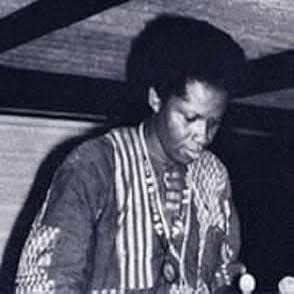
Samuel Akpabot (3 October 1932 – 7 August 2000) remains one of Nigeria’s most respected composers, ethnomusicologists, and cultural scholars—a man whose career bridged continents and whose work helped define the relationship between African tradition and Western classical forms. Known for his intellectual depth, multi-instrumental talent, and lifelong dedication to African musical heritage, Akpabot’s legacy continues to shape the study and performance of indigenous music in Nigeria and beyond.
Born on 3 October 1932, Akpabot showed early promise both academically and artistically. His secondary education at King’s College, Lagos, placed him among some of Nigeria’s future national figures, including Emeka Ojukwu, Lateef Jakande, and Alex Ekwueme. Even as a student, he was recognised for his disciplined musicianship and a curiosity that pulled him toward both classical traditions and the rich soundscape of African rhythms.
His formal musical journey took him across the world. He attended the Royal School of Music in London and later furthered his studies at the University of Chicago. These institutions provided him with a solid grounding in Western classical music, but they also strengthened his resolve to deepen global understanding of African traditional sound. Akpabot would later become a Fellow of Trinity College of Music, London, and an Associate of the Royal College of Music, distinctions that placed him among the most formally recognised Nigerian musicians of his time.
Before delving fully into classical composition, Akpabot was active in Lagos’ vibrant highlife scene of the 1940s, performing with popular bands, including Bobby Benson’s ensemble. This background gave him an intimate knowledge of both popular and traditional performance styles—experience that later influenced the textures and rhythmic patterns in his symphonic works.
By the time he returned to Nigeria, Akpabot had developed a clear mission: to champion African traditional music and integrate its structures into formal compositional practice. He became a leading crusader for the revival and scholarly understanding of indigenous music, spending years conducting field research, documenting musical traditions, and teaching both in Nigeria and abroad. His research was rigorous, and his passion for cultural preservation was unrelenting.
As a broadcaster with the Federal Radio Corporation of Nigeria (FRCN), he produced a range of educational radio programmes designed to help Nigerians appreciate the musical heritage of their communities. His work in media was complemented by regular newspaper columns in which he promoted cultural awareness and highlighted the importance of indigenous music in national identity.
Akpabot’s compositions reflect his dual commitment to scholarship and creativity. His major works include Suite Nigeria for symphony, Ofala Festival for wind symphony and African instruments, Tone Poem, Nigeria, Verba Christi (an opera cantata), and Jaja of Opobo, an opera rooted in historical storytelling. These pieces blend Western orchestration with African melodic forms, rhythmic patterns, and instrumental colour, resulting in a distinctive style that made him one of the earliest Nigerian composers to successfully merge the two musical worlds.
His academic career also spanned continents. He served as a Visiting Professor of Music and African Studies at Michigan State University in the United States, where he contributed to the growing global interest in African musicology. In Nigeria, he taught and mentored young musicians at the University of Uyo, promoting research, originality, and respect for cultural roots.
Samuel Akpabot passed away on 7 August 2000, leaving behind a vibrant body of work, numerous scholarly contributions, and decades of cultural advocacy. More than two decades after his death, his influence continues to resonate in the fields of composition, ethnomusicology, and the preservation of indigenous music traditions. His life’s work stands as a reminder that cultural heritage, when studied and celebrated, becomes a powerful instrument of identity and pride.


 Broadcasters