 Broadcasters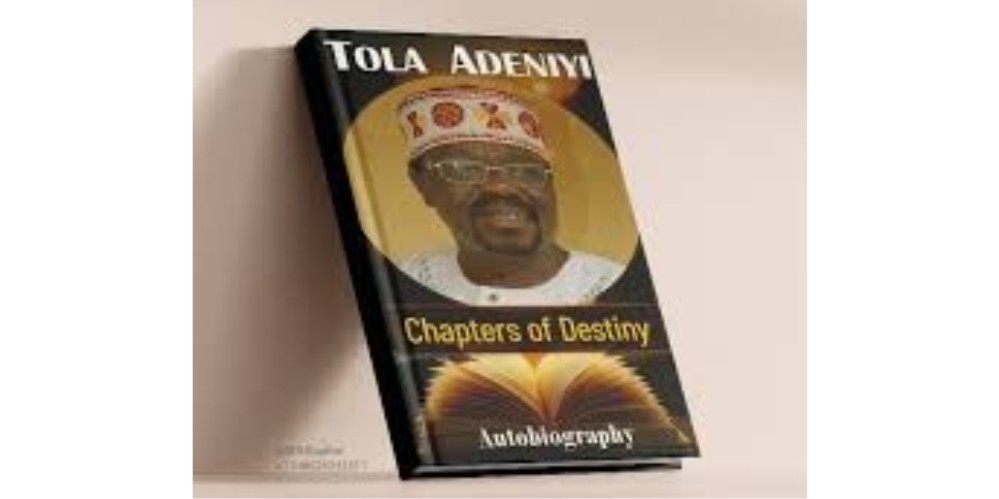
From the Dedication to the Prologue, one theme rings clear: this life was not random. It was authored in the invisible ink of Olodumare, shaped by akunleyan (chosen destiny), moderated by ori, and tested by character. Adeniyi does not merely live; he fulfils.
But if destiny wrote the script, mischief directed the early rehearsals.
One of the most cinematic episodes arrives before his wedding. Months earlier, through his friend Femi Sonaike—the same senior who once shared a bucket of water in the hostel—he receives a prophetic message: the woman he will marry will walk into his house herself as proof of fate. Years later, she does. Providence, in Adeniyi’s telling, rarely descends with thunder. It arrives as friendship.
If destiny governs the heavens, injustice governs the assembly ground. Few scenes bite as sharply as the public flogging of students whose parents failed to pay school fees. “Debtors come out!” Sixteen lashes. Hard labour. Grass cutting. Children punished for parental poverty. It is told without melodrama, which makes it worse. The cane becomes his first political education. The agitational journalist is born in bruised silence.
Then comes the theological grenade. Reverend Edokpolor announces that the Bible “was not written by God” (pp.23–24). The Acts of the Apostles written decades after Christ. Contradictions. The “Jesus of history” versus the “Jesus of faith.”
Here, one must part ways with both Edokpolor and Adeniyi’s endorsement of the thesis. The sweeping claim that biblical authorship reduces revelation to mere literary construction is intellectually, historically and archeologically contestable. The Christian tradition has long held a doctrine of divine inspiration without dictation — a complex interplay of human authorship and divine guidance. To flatten that nuance into “men like you and I put words in God’s mouth” makes light centuries of theological scholarship.
Yet, whether one agrees or disagrees, this lecture marks a turning point. It pushes Adeniyi into critical interrogation of imported religions. It plants the seed that later blossoms into Mareism — his personal creed centred on Olodumare and the Breath of Life.
Enter Mr. Ogunsanwo, the tyrannical housemaster. The retaliation is pure theatre: seven boiled eggs, seven cowries, seven kolanuts, feathers, coloured cloth, palm fronds soaked in oil—arranged before his door at 2 a.m. At dawn he opens the door, beholds the ritual tableau, nearly collapses—and soon disappears from the school forever.
No riot. No violence. Just psychological warfare rooted in cultural symbolism. Mischievous, theatrical, subversive. The future columnist Aba Saheed is already rehearsing the art of destabilising power without brute force.
The Barker protest follows. Faces painted. Leaves plucked. “No Barker, No School!” The town paralysed. Punishment: 24 strokes and suspension. Yet the Kabiyesi commends their non-violence. It is political apprenticeship in miniature—mass mobilisation, message discipline, punishment endured without regret.
There is also temptation. After playing Prince of Aragon, a curvaceous Lagos girl insists on following him back to Ago-Iwoye. He notices the dimples, the Suku hairstyle, the intent. But he is also the teenage author of Teenagers Must Repent. Desire collides with moralism. It is comic and deeply human.
More startling still is his candid recollection of being “made a man” at 19 by a British acquaintance. Poetry readings give way to experience, even as he publicly frets about teenage morality. The tension is not hypocrisy—it is youth in collision with its own ideals.
Then darkness descends. The kidnapping of Uncle Al-Hameed. The diviner’s verdict: “living-dead.” The Atinga cult encounter. Trauma births inquiry. Inquiry births Soul Fire. Destiny, here, wounds before it reveals.
One striking feature of the autobiography is the density of names. Classmates, governors, professors, protégés. He counts over fifty “college sons.” Decades later, he chairs the Board of Governors of the same school where he once mocked teachers in the press club. The angry English master, later the school’s principal, now calls him “Mr Chairman Sir.”
This is accumulated social capital. Adeniyi invests in relationships, remembers names, forgives detractors. Two who maligned him apologise before death—and he forgives. Soft skills become destiny’s infrastructure.
Though he insists the book is not a manifesto, politics saturates it. The 1954 tax riot. The baton war. Rebellion against scheming teachers. The satirical “News of the Week.” Dissent is not acquired; it is native.
A particularly poignant episode occurs in 1963. His father takes him to Professor Sanya Dojo Onabamiro seeking sponsorship for further studies. They wait from morning till afternoon. When the minister appears, he humiliates them publicly: higher studies, he says, are for children of ministers—not boys like him. Tola weeps. His father is dazed.
Sixteen years later, Adeniyi becomes head of publications at Tribune Newspapers and develops cordial relations with the same Onabamiro. The wheel turns. Slowly. But it turns.
Birth controversies. Double promotions. Escape from school only to be tied to a teacher’s table and fed cookies. Assassination attempts. Coincidences that feel choreographed.
Whether one subscribes fully to his metaphysics or not, the thematic coherence is undeniable. Destiny is his organising principle—but character is the engine.
In a powerful essay toward the end, Adeniyi invokes a Yoruba proverb: look at the soup before eating the pounded yam. Bad soup ruins good pounded yam. Character, he argues, is Nigeria’s crisis. Leadership without omoluabi virtue corrodes society from the top down. Only a fraction of the elite, he suggests, possesses even a molecule of good breeding. It is a stinging social diagnosis wrapped in proverb.
Chapters of Destiny is mischievous yet metaphysical, theatrical yet theological. It is not the autobiography of a saint. It is the memoir of a Lucky Star who survived canes, conspiracies, cult scares, coups, critics and temptation.
The boy who staged ritual theatre to scare a housemaster becomes the journalist who stages rhetorical theatre to scare corrupt politicians. The debtor flogged for unpaid fees becomes the advocate of the masses. The humiliated applicant becomes the respected editor.
Destiny dealt him cards. Character taught him how to play them.
Lucky Star answers “Success.”
And in many ways, he earned it.
* Sina Kawonise, Former lecturer in sociology, Olabisi Onabanjo University, Ago-Iwoye, is currently Publisher/Editor-in-Chief, NewsScroll newspaper

 Our Reporter