 Broadcasters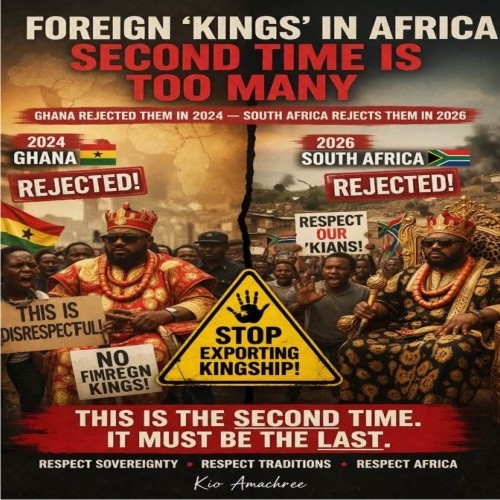
This time, it is South Africa.
Last year, it was Ghana.
In both cases, the reaction has been the same: anger, rejection, and a clear message from host populations that this behavior is unacceptable.
THIS IS A PATTERN — NOT AN ISOLATED INCIDENT
Let us stop pretending this is cultural expression misunderstood.
This is now a pattern.
• Ghana objected strongly when similar moves were made
• South Africa is now pushing back with equal force
• Local communities see it as intrusive, provocative, and disrespectful
Twice in two countries is not coincidence.
It is repetition.
YOU CANNOT EXPORT KINGSHIP
Kingship in Africa is not a costume.
It is not a title you recreate abroad for prestige.
It is rooted in:
• land
• ancestry
• historical legitimacy
• recognition by indigenous people and the state
You cannot arrive in another man’s country and crown a “king” on his soil.
That is not culture.
That is overreach.
WHY HOST COUNTRIES ARE ANGRY
The anger in South Africa — just like in Ghana — is grounded in reality.
These acts raise serious concerns:
• Creation of parallel authority structures
• Undermining of local traditional leadership
• Potential for ethnic tension in already sensitive environments
• Disrespect toward national sovereignty
African countries are already managing complex internal dynamics. Importing external structures of authority only adds fuel to the fire.
A GROWING REPUTATIONAL PROBLEM
Incidents like this are adding to a wider perception problem.
Across multiple regions, host communities are increasingly frustrated by actions that appear:
• tone-deaf
• unnecessarily provocative
• dismissive of local norms and sensitivities
Instead of building bridges, these episodes create tension.
Instead of strengthening diaspora influence, they weaken it.
CULTURE IS NOT THE ISSUE — CONDUCT IS
Let’s be clear.
No one objects to Nigerians — or any African diaspora — preserving culture, language, or identity abroad.
That is normal. That is respected.
But attempting to recreate political or traditional authority structures on foreign soil crosses a line.
And that line is sovereignty.
AFRICA MUST DRAW BOUNDARIES
Governments across the continent need to act:
• Ban unauthorized coronations
• Clarify legal limits of diaspora cultural institutions
• Protect indigenous traditional systems
• Prevent the emergence of parallel governance structures
Because if this continues unchecked, it will not end with ceremonies — it will evolve into conflict.
FINAL WORD
This is the second time this has happened.
It should be the last.
Africa cannot afford unnecessary tensions created by avoidable actions.
Respect the land you are in.
Respect the people who own it.
Respect the systems that govern it.
Anything less is not pride.
It is provocation.