 Our Reporter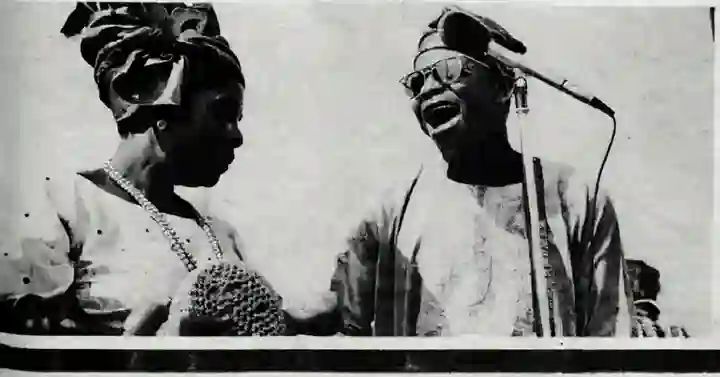
His uniqueness came from the fact that he and his wife often collaborated together in providing music with Julius on the guitar and his wife on the ‘sekere’.
Julins Araba was a veteran juju musician. His discs sold like hot cakes and topped the juju charts. His popular hits included Easy Motion, Olomo Fiila and many others.
He came into the limelight when he performed at Odan now Race Course for Queen Elizabeth II in 1956.
A retired railway worker, Julius entertained his friends and well-wishers on request, and appeared on radio and television occasionally.
Born in Lagos on May 24th, 1922, Araba was a native of Badagry while his wife hailed from the Republic of Benin.
Araba’s uncle taught him how to play the guitar in 1930. He later perfected the skill as a guitarist with the support of some of his old friends like Mr. Young Ladipo Bepo, Chief Odumosu, Dele Timple Ranco, J. O. Oyesiku, Lanre Ogungbemi. He joined Nigerian Railway Technical School as an apprentice and later joined Pattern Makers also as an apprentice in 1942. He was later transferred to Carriage and Wagon (Loco) EbuteMetta as an artist because of his experience in drawing.
In 1955, he assembled four boys including Olaseni Tejuosho, Fatai Rolling Dollar, Eddy Polo and they termed the musical form as Randy Blues.
Araba during his playing days had people like Tunde King, Ojoge Daniel, C. A. Balogun, Tunde Nightingale, Ayinde Bakare, Irewolede Denge all as contemporary singers. He retired from Railway as a Chief Mechanical Draughtsman in 1977.
Araba is known to have played at the Grand Opening Ceremony of the W.N.T.V Ibadan and N.T.A. 10 Lagos both in 1960 and 1962 respectively. Mr. Ayo Vaughan, then in the Naval Band, played the guitar in Kelegbe Megbe.
Araba, the man who contributed immensely to music in Nigeria finally gave up the ghost on September 15th, 1989.
Source : Ethnic African Stories