 Our Reporter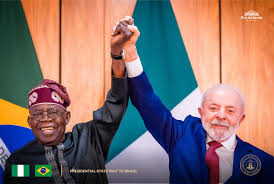
In a world where global alliances often shift like sand, the renewed engagement between Nigeria and Brazil stands out as a testament to the enduring power of vision, diplomacy, and mutual respect. President Bola Ahmed Tinubu’s visit to Brazil in August 2025, his third since assuming office in 2023, signals more than ceremonial courtesy, it underscores a deliberate and strategic partnership with tangible economic, technological, and social dimensions.
At the heart of this engagement is the imminent return of Petrobras to Nigeria, marking a historic revival of energy cooperation between the two nations after a five-year hiatus. Tinubu’s remarks on this milestone were clear: Nigeria’s abundant natural resources, particularly its vast gas repositories, present a frontier of opportunity, one that Brazil is now positioned to partner in developing. This is not just about oil or gas, it is about reigniting trust, collaboration, and economic synergy.
The signing of five Memoranda of Understanding (MoUs) spanning trade, diplomacy, science, aviation, and finance reflects a nuanced understanding that true partnership transcends rhetoric. Brazil’s pledge to establish an Embraer Service Centre in Nigeria to maintain aircraft fleets is emblematic of a relationship that moves beyond symbolic gestures to practical, structural support. For Nigeria, this represents not only technology transfer but also skills development, job creation, and regional aviation leadership.
President Tinubu’s vision for the partnership is clear, a shared economic future rooted in innovation, technology, renewable energy, and food security. His emphasis on healthcare, pharmaceuticals, and manufacturing highlights an ambition to position Nigeria not merely as a resource hub, but as a nation of innovation and industrial capability a vision Brazil has long exemplified in Latin America.
President Lula’s response reinforced this alignment. At a time when global protectionism threatens progress, both leaders reaffirmed their commitment to free trade, productive integration, and cooperation between the world’s two largest countries with Black populations. The planned direct Air Peace flight between Lagos and São Paulo is more than convenience, it is a bridge of people-to-people connection, commerce, and cultural exchange.
The Nigeria-Brazil partnership exemplifies the possibilities of South-South cooperation when shared history, complementary strengths, and strategic intent converge. It is a reminder that leadership is not only about domestic achievements, but about creating alliances that broaden horizons for future generations.
As Nigeria and Brazil continue this journey together, the message is clear, the new frontier is not just geographical it is technological, economic, and human. This partnership, built on trust and action, demonstrates that when nations commit to shared growth, the results can reshape industries, societies, and the contours of international relations.
Indeed, President Tinubu and President Lula are proving that true diplomacy is measured not in visits and handshakes, but in meaningful, lasting impact turning potential into prosperity, and vision into reality.