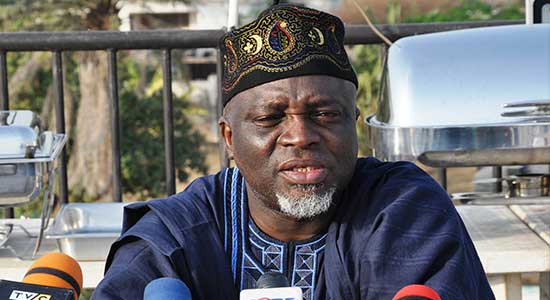
 Broadcasters
Recently, three reputed international media organizations highlighted a transformative narrative about Nigeria that often escapes domestic headlines.
Reuters documented the rise of millionaire cocoa farmers—visionaries leveraging innovation and scale to revolutionize agriculture, a sector foundational to Nigeria’s economic resurgence.
Similarly, Financial Times (of London) reported on Chemical and Allied Products Plc, a leading Nigerian paint manufacturer that pivoted to sourcing raw materials locally in response to prohibitive foreign exchange costs, illustrating corporate adaptability amid macroeconomic constraints.
Bloomberg News also reported on how corporate organizations like Dangote Industries Limited and BUA Group are cutting imports, projecting them as a key example of the trend towards local sourcing in the Nigerian “do-it-yourself” economy.
These stories, by esteemed global media, offer a counterpoint to prevailing perceptions—remarkable accounts of resilience and growth under pressure.
For decades, Nigerians have critiqued foreign media for disproportionately amplifying negative stories, often portraying the nation as perpetually in crisis.
Unfortunately and paradoxically, this narrative has flipped domestically. Many Nigerian media outlets today prioritize sensationalism over substance, focusing primarily on sound bites and sentiments rather than investigative rigor. Positive developments are eclipsed by relentless focus on challenges.
From prime-time TV shows to opinion columns and digital platforms, the appetite for negativity dominates. The phenomenon of destructive media has become a self-sabotaging prophecy, shaping public sentiment and policy discourse with disproportionate pessimism.
The Tinubu administration’s second anniversary provided a rare moment for reflection. Accessible public data highlighted significant investments in infrastructure: roads rehabilitated and constructed; health facilities modernized; rail networks expanded; student loans granted; agricultural initiatives scaled; and industrial activity showing renewed vigor. Yet, these achievements were met largely with skepticism or silence.
Only few media outlets bothered to verify these claims or highlight their real-world impact. The nation’s progress quietly unfolds beneath a cloud of skepticism and selective reporting, hindering public understanding and stifling constructive engagement.
The flourishing of destructive media is a crisis of narrative stewardship—wherein the power to influence public discourse is wielded without proportional responsibility.
Reclaiming the narrative with balanced, fact-driven journalism is essential to reflect Nigeria’s complex reality and foster optimism rooted in truth.